Age-Related Macular Degeneration (AMD) is the leading cause of vision loss for people over 50. We spoke to Susan, who has been through the diagnosis process and shares her experiences of dealing with her prognosis and the support she has received.
February is Age-Related Macular Degeneration (AMD) and Low Vision Awareness Month. If you're worried about yours or someone else's eyesight or simply want some information and advice, visit our Support Line page for details of how you can get in touch with us today.
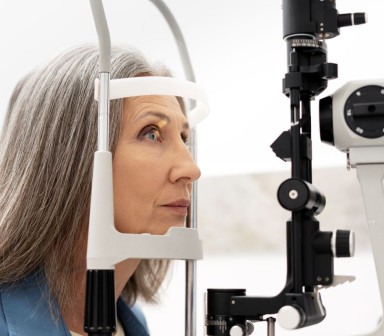
How did Susan find out she had macular degeneration?
Susan’s mother had macular degeneration and so she was aware of the condition as she supported her mother and attended the eye clinic with her. She was also aware of the genetic connection, however her two sisters have not been affected by the condition.
Susan was diagnosed with dry macular degeneration when it was at a very early stage and wasn’t affecting her, and so she was able to carry on with life as normal, making sure to attend regular scans and check-ups with her optician to track any changes.
One day, however, she was driving into town with a friend when she started to see halos. Her friend suggested they go straight to an optician to get it checked. When Susan was asked to read the letters on the charts, she said to the optician, “What do you mean? There are no letters up there”. All she could see was abstract shapes and colours.
At the age of 58, Susan's macular degeneration had changed from dry to wet and had deteriorated rapidly.
At this stage, Susan was told she was still able to drive. However, one night soon after she misjudged a turning and ended up on a grass verge. From then, she made the decision not to drive again. She described giving up driving as one of the biggest losses, making her dependent on others.
What emotional support was offered by the eye department and ophthalmologist?
Susan was aware that her mental health had been deteriorating steadily since the diagnosis and spoke of the “terrible feelings of hopelessness” which centred around the uncertainty of her eye condition.
Recognising this, Susan’s ophthalmology nurse referred her to the Mental Health nurse at her practice. After her assessment, Susan was offered anti-depressants as well as telephone counselling to help her better manage the changes to her eyesight. Susan declined both, saying she found it difficult “opening up” to strangers and would struggle to talk over the phone.
Susan's 8 weekly scans recently moved to 12 weekly which has given her hope, whilst also being aware it is a degenerative condition and so could be a matter of time before her vision deteriorates further.
What was the most helpful support for Susan in her sight loss journey?
The support of her family, her local Rehabilitation Officer and Sight Scotland Veterans staff has been the most helpful for Susan. Having assumed her Rehabilitation Officer would visit just once to assess her, Susan greatly appreciates that he comes every week to work with her, helping to build her confidence around the home, when using the kitchen, and enabling her to live more independently.
Susan has also attended the Sight Scotland Veterans Sight Support Group (VSSG) and found speaking to other visually impaired people very helpful, to share their experiences and build connections. The Sight Scotland Veterans freephone number is stuck to her fridge and she takes comfort knowing that she can phone at any time for ongoing support.
Get in touch with us
Whether you've been diagnosed with an eye condition or know or support someone that has, or you've noticed changes to your eyesight, we're here to help.
Get in touch with our professional team today for advice, guidance and support.
Age-Related Macular Degeneration (AMD): Treatment, Symptoms & Diagnosis
Learn about age-related macular degeneration (AMD), its causes, symptoms, and treatment options in Scotland. Get expert advice and support today.
Find out more
You may also be interested in
Information, Advice and Resources
Whether you're looking for guidance for yourself, or want to know more about how to support someone with sight loss or blindness, our resources can help.
Glaucoma: Treatment, Symptoms & Diagnosis
Learning more about Glaucoma. Sight Scotland Veterans rehabilitation officer, Katrina, offers expert advice on coping with a glaucoma diagnosis.
Charles Bonnet Syndrome (CBS): Symptoms, Causes and Treatment
Advice on Charles Bonnet Syndrome (CBS), symptoms, and causes. Learn about treatments and coping strategies from our Veterans Rehabilitation Officer.