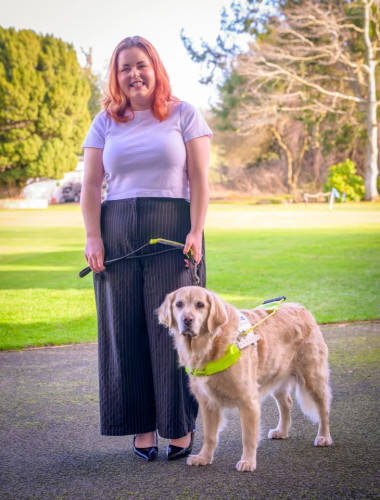
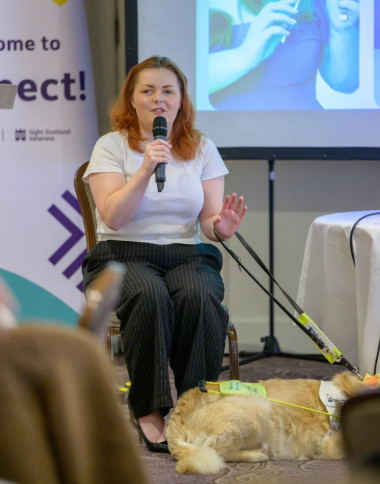
Award-winning journalist, author, and disability activist Lucy Edwards recently joined our Sight Scotland and Sight Scotland Veterans Connect event, where she spoke about everything from her career to the importance of lived experience in services and media representation.
Lucy Edwards, who lost her sight aged seventeen due to incontinentia pigmenti, has built a significant presence on TikTok, with her account ‘British Blind Girl’ reaching 1.8 million followers.
Alongside her social media success, she is an award-winning BBC journalist, a Blind Barbie ambassador, and more recently has turned her hand to writing children’s books. Just last year, she visited Sight Scotland’s Royal Blind School in Edinburgh as part of her book tour for Ella Jones vs The Sun Stealer.
How did you first start sharing your story on social media?
“It all started because I thought I needed to find a community, because I felt very alone at that time. I remember that time and telling Terry, my mobility instructor, that my cane was really uncool.
"I had a love/hate relationship with my cane. I think it is like what most teenage girls go through - they don't want to be different and just want to be the same as everybody else. So I started making videos being like, "I have no friends at school, and I do not feel very cool anymore, and all my friends have gone off to university". I remember talking to the camera and the more I talked, the more I found people like me.”
What has been a standout moment for you so far?
“I think for me, it was when we released Blind Barbie. It was incredible. So many parents were filming their children seeing the doll for the first time, and some of them were in tears.
"It made me so happy that, finally, whether you are blind or not, you can play with a Barbie that has a long white cane. That kind of representation matters so much, because it helps normalise blindness and makes it part of everyday play.”
"When we released Blind Barbie... It made me so happy that, finally, whether you are blind or not, you can play with a Barbie that has a long white cane. That kind of representation matters so much, because it helps normalise blindness and makes it part of everyday play.”
What still needs to change to make everyday life more accessible?
“When it comes to accessibility, there can be a lot of trial and error. But, for me, it is important to remember that failing is a good thing. I remember in my early stages being terrified to go on the train. Then I had my first guide dog, Olga, and would plan, "I am going to get my mum to put me on the train and Olga to take me off the train". Celebrating those little wins are important.
“We do not live in a world that is built with us in mind. We live in a sighted world that often does not meet our needs. That is why things like the free companion scheme in Scotland are so important. When you look at the transport system, it still is not designed to work well for everyone, and support like this helps make a real difference.
“What Sight Scotland and other organisations are doing is incredibly important in bringing people together to focus on issues like transport and accessibility more broadly. They create spaces where people can share their experiences, identify the barriers they face, and work towards meaningful change.
"A big part of that is making sure people feel confident to speak up about what matters to them. Change is most effective when it is shaped by lived experience, not assumptions. By listening to those voices and putting them at the centre, these organisations help ensure that solutions are practical, relevant, and make a real difference in people’s everyday lives.”
“We do not live in a world that is built with us in mind. We live in a sighted world that often does not meet our needs. That is why things like the free companion scheme in Scotland are so important. When you look at the transport system, it still is not designed to work well for everyone, and support like this helps make a real difference.
How important is lived experience in shaping services and design?
“I think it’s so important. For example, I picked up some shampoo a few years ago in the supermarket and it had braille on it... I went to go read the braille, and it was just the brand name. If they had someone round the table with lived experience that would not have happened... I would have said write 'shampoo' or 'conditioner' on it.
“It is important to give people the time and space to talk about their own lived experience. People need to feel heard and be actively invited into the conversation. Organisations like Sight Scotland, which prioritise lived experience, play a vital role in championing and supporting this. From specialist education at places like the Royal Blind School to developing daily living skills, they help tackle isolation, build independence and confidence, and empower people to speak up about what matters to them.”
How much does representation in the media matter?
“It matters so much. That is why having disabled journalists at organisations like the BBC is so important. We would not have the journalism we have today without their voices and perspectives shaping it.
"You can see the impact even in the language people use. For example, terms like ‘wheelchair-bound’ still come up, and we challenge that. People are not bound to their wheelchairs. Language shapes understanding.
"The media has a huge role to play in educating people. It helps show that, yes, visual impairment is a disability, but it does not have to define who you are. Everyone deserves the same chances and opportunities in life, and representation helps open people’s minds to what is possible.”
What would you say to others about sharing their own stories?
“I think it is something we all need to do. The more stories that are shared, the more people can see themselves reflected in them. There’s real value in hearing different perspectives and experiences.
“I would say don’t be afraid to put yourself out there. Think about what kind of impact you want to have, how you want to shape the world, and who you want to be, especially on social media. It is about understanding that taking action, even imperfectly, is better than doing nothing. I had posted thousands of videos before anything really clicked for me.”
You can find and follow Lucy Edwards on her social media accounts below:
Instagram: @lucyedwardsofficial
Facebook: @lucyedwardsofficial
TikTok: @lucyedwards
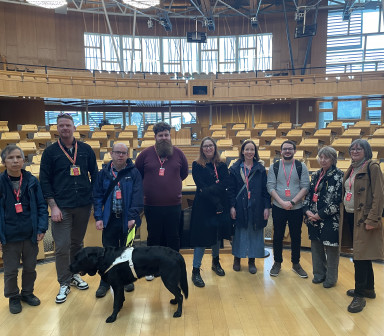
True inclusion for the visual impaired starts with attitudes, not architecture
When people talk about accessibility, they often think about the physical changes that make places easier to navigate - but if we stop there, we miss half the picture. True inclusion is not just about changing buildings; it is about changing minds.
Lived Experience
Real-life experiences of those with sight loss and/or visual impairment give us an informed perspective from those directly affected by these conditions, so we're better able to influence policy and create campaigns that provide real, needed support.