At Sight Scotland and Sight Scotland Veterans, we believe everyone should be able to vote independently and confidentially. But for many people with visual impairments, going to a polling station can still feel uncertain or inaccessible.
That’s why, ahead of Scotland’s Parliament elections on 7 May, we’ve been working closely with the Electoral Management Board for Scotland to make voting more accessible. Together, we’ve helped deliver training to Returning Officers and more than 900 polling staff in Edinburgh, focused on how to better support blind and partially sighted voters.
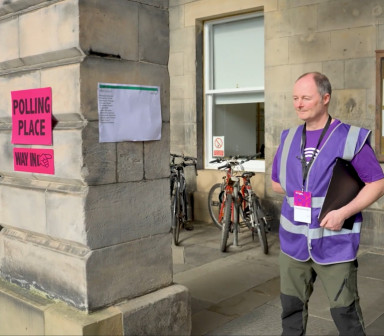
Watch our video outlining what support visually impaired voters can expect at Scotland's polling stations below.
The barriers to accessible voting
For many of the people we support, the barriers to voting aren’t just physical, they’re also about confidence. Polling stations can be unfamiliar environments, and staff don’t always feel confident in how best to help. That can lead to inconsistent support, whether it’s using accessible voting aids, guiding someone safely, or clearly explaining the process.
There are also practical challenges, like poor lighting, unclear signage, or information that isn’t available in accessible formats. And crucially, some people are hesitant to ask for help at all, worried it could affect the privacy or independence of their vote.
We wanted to change that.
Placing lived experience at the heart of the training
Working in partnership with the Electoral Management Board for Scotland, we helped develop a training video for polling station staff across Scotland, shaped by people with lived experience of sight loss as well as our specialist teams. Members of our Policy Group and rehabilitation staff helped design and feature in the video, making sure it reflects real-life situations and practical support.
Colette Walker, Co-Chair of our Policy Group, who appears in the video, explains why this matters:
“Every adult has a democratic right to cast their vote in privacy. By breaking down these long-standing barriers, we are ensuring that visually impaired voters in our communities finally have the same say as everyone else. We hope to see a record turnout of blind and partially sighted voters in two weeks’ time, casting their vote, having their say in politics.”
The training focuses on simple but important actions; how to guide someone safely, how to clearly explain the layout of a polling station, and how to support someone who may want assistance marking their ballot.
For Policy Group member Hussein Patwa, being part of the project was about making a practical difference:
“I was delighted to be involved in producing training videos that will be shown to polling station staff across Scotland. Featuring myself and other visually impaired people, they demonstrate, in real life, practical examples of the correct sighted guiding technique.
“I am positive this will make a real difference to visually impaired people’s experience at polling stations, encourage those who haven’t done so before to try voting in person and increase confidence for both voters and polling staff alike.”
Small changes, big impact
We know that small changes can have a big impact. Measures like large print ballot papers, tactile voting devices, magnifiers and better lighting are already available in polling stations, but making sure staff feel confident using them is key.
Malcolm Burr, Convener of the Electoral Management Board and Returning Officer for Comhairle nan Eilean Siar, comments:
“We want everyone to be able to vote independently and in secret. Our polling staff are the public face of the election and the lessons in this video will help them as they prepare to welcome voters with visual impairment into the polling places on 7 May.”
By working together with election teams across Scotland, we’re helping make sure that when people with sight loss arrive at a polling station, they’re met with understanding, clarity and the right support.
Because having your say should feel accessible to everyone.