Here you can find stories from Vision Collaborative Scotland's Support After Sight Loss campaign, and hear about the direct positive impact vision rehabilitation makes on the lives of those people living with sight loss.
Case studies
Bill Reilly
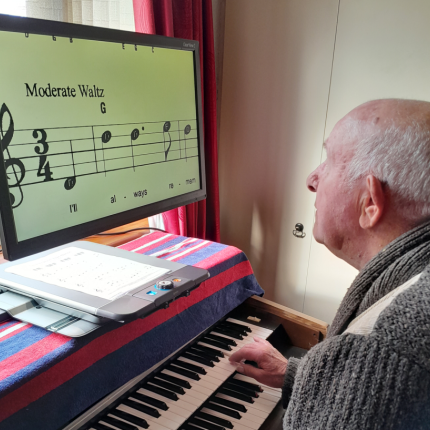
Bill Reilly is 90 years old and has played the organ for as long as he can remember. When his eyesight deteriorated, reading sheet music became almost impossible. He was playing from memory, but it wasn't the same — he missed being able to see the notes.
His rehabilitation officer at Sight Scotland Veterans helped Bill to find a solution. Standard magnification equipment isn't built for reading sheet music in a precise way, but connecting it to a CCTV magnifier worked wonders. Doing so meant that Bill could see the notes clearly.
"It's amazing to be able to read and play music again. I feel like I've got a part of myself back."
His family are now busy printing out sheet music for a long list of songs so Bill can expand on his repertoire even more.
Frank Beeby
Frank Beeby lost his sight with no immediate outreach and no guide for how to cope. Vision rehabilitation changed that.
"Vision rehabilitation is essentially enabling me to live a more normal life. It's a tool that enables me to do things that I didn't know how to do after losing my vision."
Ross
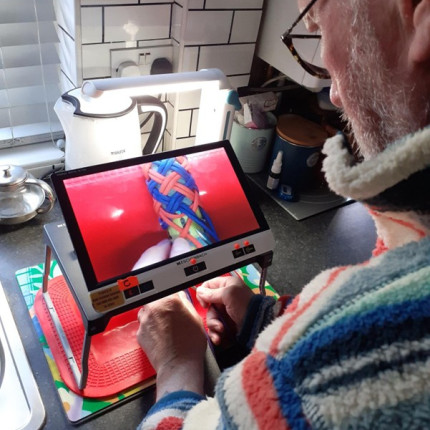
Ross had been trying to find a way to carry on with rope tying after his sight changed — including various handheld devices. Nothing gave him the clear, steady view he needed with both hands free to work.
His rehabilitation officer Rachel at Sight Scotland Veterans introduced him to a stand magnifier. The image stayed still. His hands were free. He could see the rope clearly enough to work with it.
"The support has been lifechanging. I can continue with the hobbies I enjoy, and I have so much more confidence when I'm out in the community."
Rachel also helped Ross with long cane training, so he can now travel independently around Edinburgh — crossing roads safely, navigating the train station, getting out on his own terms.
Hyo-In Koo
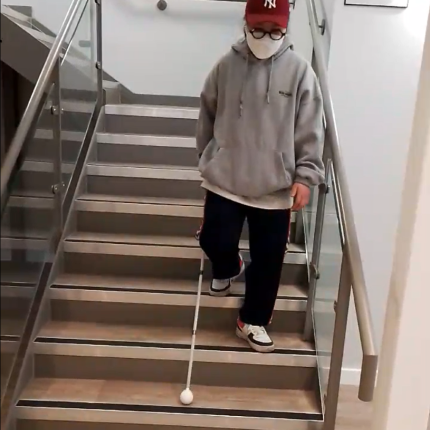
Hyo-In Koo came to Edinburgh from South Korea to study Sound Design. A visual impairment meant getting around at night had become exhausting — she was always looking at the ground to navigate safely. Working with Rehabilitation and Mobility Officer Gemma, she learned to use a long cane at a pace that felt right for her.
She left Edinburgh moving confidently and independently. Routes she had found difficult became navigable. She stopped watching her feet.
"I don't look at the ground anymore when I walk. I trust my cane to give me the feedback of what's in front of me. I can't thank Gemma and Sight Scotland enough."
Hyo-In got this support because the right help was there when she needed it.
Mary Swan
Mary Swan from Edinburgh has retinitis pigmentosa, a condition that has gradually affected her sight. Getting out alone had become daunting — she used to walk with her head down, worried about losing her balance. She had been thinking about calling Sight Scotland for some time, but kept putting it off.
When she finally called, she was paired with rehabilitation officer Diane, who helped her build up her confidence with a long cane. They worked on routes, road crossings, getting onto buses.
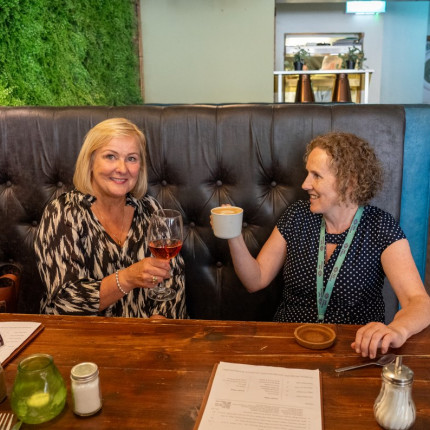
"Diane has just been great — she really has changed my life. I can now walk to my local pub on my own on a Friday night to meet my friends. I wanted to be able to do that myself."
Mary's world has opened up so much thanks to the support from her rehabilitation officer. Her next goal is to get the bus into Edinburgh city centre and walk down Princes Street.
Stephen
Stephen Jennings suffered a massive stroke in his front room. That day, Stephen lost his independence as well as the sight in his left eye and him and his wife's lives as they knew it changed forever.
Months went by after Stephen’s stroke before the Jennings learned about Sight Scotland Veterans
“The support we have received from Sight Scotland Veterans has been fantastic.”
Allan
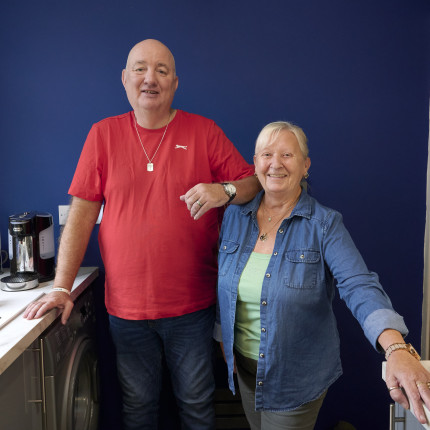
At just 21, Allan’s world was turned upside down when he was medically discharged after being diagnosed with type 1 diabetes. Now 38, Allan, from Perth, faces an even greater challenge - diabetic neuropathy, a life-limiting condition that has affected his vision and changed the course of his life
Despite this devastating prognosis, Allan has found renewed strength and hope through Sight Scotland Veterans.
He is embracing each day with courage and purpose, proving that even in the face of immense adversity, it’s possible to find a new vision for life.
Lara
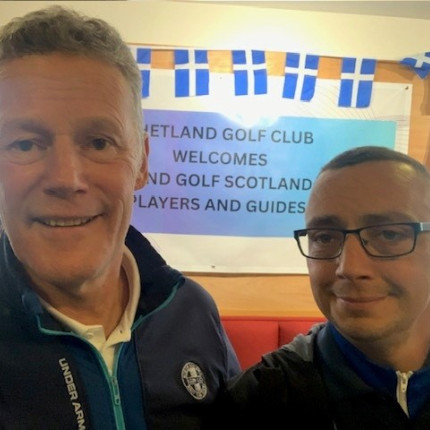
Lara was just 22 when she experienced her first stroke-like episode, which left her with visual field loss. Vision Rehabilitation helped her regain independence and confidence.
Lara’s journey is a powerful example of why access to Vision Rehabilitation is so vital.
Lara spoke to Vision Collaborative Scotland member, Visibility Scotland, about her experience.
Lewis
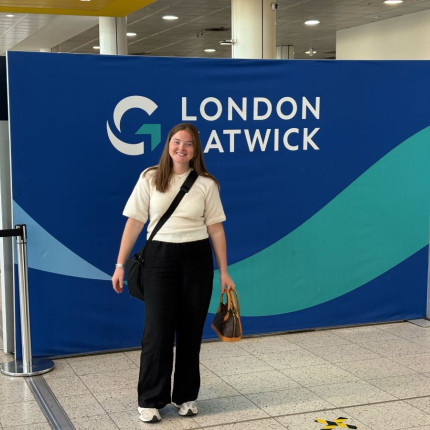
Rehabilitation support is an important lifeline for people with a visual impairment, and it must be protected at all costs. Lewis believed he had lost his independence as a result of his visual impairment. It was only when he was introduced to a rehabilitation worker in 2014 that his world opened back up again.
“I began to realise then that it was possible to make my own choices, travel independently, and be optimistic about the future… I started travelling to places I never imagined possible, and saw the doors open up as a result.”
Margaret
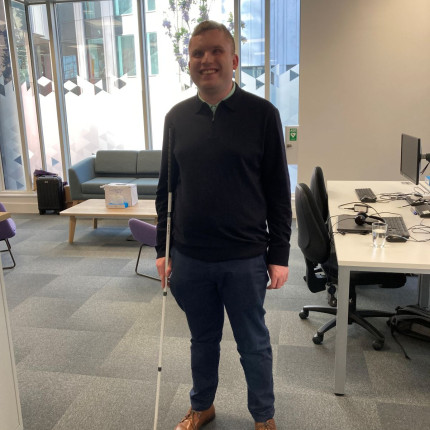
Margaret, 71, from Kirkintilloch, has had poor eyesight since she was a child, but it wasn’t until she was 19-years-old that she was diagnosed with a rare genetic eye condition called juvenile glaucoma.
Guide Dogs’ Vision Rehabilitation Service gave Margaret the confidence to continue leading an active and independent life, helping her to navigate safely with her long cane and taught valuable skills within her home.
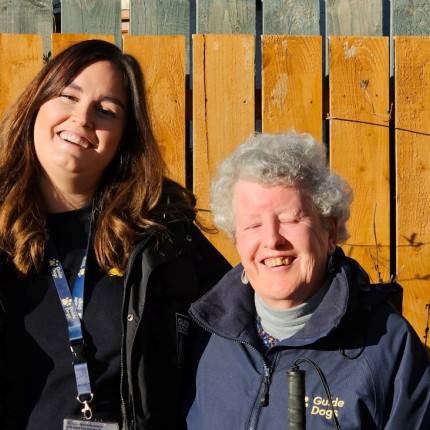
Ethna
Having recently retired from her job as a shop assistant, Ethna woke up one morning in 2020 to find that she could not see anything out of her left eye. Having experienced headaches and a sore neck, she was later diagnosed with giant cell arteritis, an inflammatory disease which often affects the arteries at the side of the head.
Ethna Taylor, 70, shares her experiences of sight loss, and how much she has benefited from the support provided by NESS.
Garry
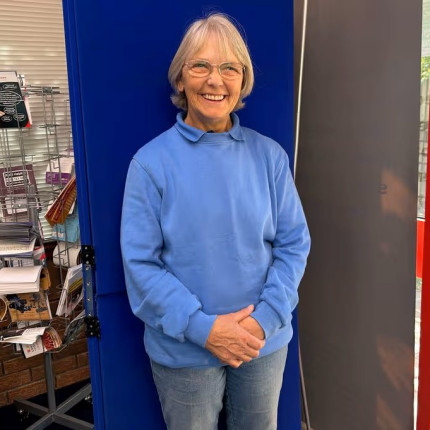
Garry Ritchie is a board member of VisionPK.
At just the age of 40, Garry was diagnosed with Retinitis Pigmentosa and subsequently registered severely sight impaired. Working full time as an Engineering Project Manager could have become a challenge, but with the help of specialist rehabilitation, he was able to continue working.
“Rehabilitation ensured I kept my independence and continued my employment. After an initial vision assessment, the rehabilitation I required was mapped out and agreed."
Garry spoke to our partners at Vision PK about what vision rehabilitation has meant for him. Read more of Garry's story here.
Valerie
Valerie is in her mid-fifties and is currently living with Retinitis Pigmentosa having being diagnosed in 2015 after a series of unexplained issues with her eyes.
“All of a sudden, I found that I needed my phone torch on when leaving a dim area like the cinema. I just could not see well in the dark. While I was out running, I would start to get strange shimmering lights in my eyes. I also started bumping into door frames unexpectedly…I really had no idea what was happening to me, vision loss was not something I was expecting."
Read more of Valerie's story here and the support she has received from NESS and others.
193,674 people in Scotland are living with sight loss that affects their daily life.
With specialist rehabilitation support, people can rebuild confidence, stay independent, and in many cases remain in work. Too many can't access that support, and where you live can determine whether you get any help at all.
Everyone in Scotland should have access to this support, wherever they live.
Vision Collaborative Scotland is asking the next government to commit to national quality standards for vision rehabilitation.
Read more about the Support After Sight Loss campaign at the link below, or explore our information and resources for the vision loss sector here.