There are plenty of misconceptions about eye health, and with the rise of AI, misinformation is rife.
In this blog, our Vision Rehabilitation Specialist, Kate White, busts five common eye health and sight loss myths.
Myth 1: If you have problems with your eyes you should visit your GP.
The pathway to eye care in Scotland is through Optometrists who reside in our high street opticians.
They are the best health professional to contact with any concerns about vision and they can contact the eye hospital or eye clinic directly to arrange an appointment if further support or treatment is required.
Myth 2: All visually impaired people can read Braille/are taught Braille
Braille is used by around 7% of those who are registered severely sight impaired (blind) or sight impaired (partially sighted) (RNIB 2021).
Many people choose to rely on other forms of communication such a larger print, audio format or text to speech software - it's always better to ask rather than assume.
Myth 3: Wearing glasses can weaken your eyes and make them more dependent on glasses
Glasses correct refractive errors such a short sightedness (objects in distance appear blurry) and long sightedness (objects close up appear blurry). This ensures a person can see to their full potential.
Glasses need to change as natural ageing of the eye occurs, and not because they affect the strength of the lens in the eye.
Myth 4: Eating carrots can improve your eyesight - especially in the dark
This myth stems from soldiers in World War 2 who believed eating carrots improved your vision in the dark.
Carrots contain beta-carotene (vitamin A) which is important to maintain healthy eyes.
So, whilst they play a significant and important role in keeping the eye healthy, they won’t improve your eyesight!
Myth 5: People with colour blindness can only see in black and white
There are various types of colour blindness which means the outcome varies. It is very rare to have achromatopsia (where you can only see shades of grey).
Most people with colour blindness will struggle with determining between different hues of colour. That's why it's important not to rely on colour when highlighting the difference in text.
Explore our ‘Five things…’ blog series
Our Vision Rehabilitation team share useful information and helpful insights into the world of eye health and sight loss through our 'Five things...' blog series.
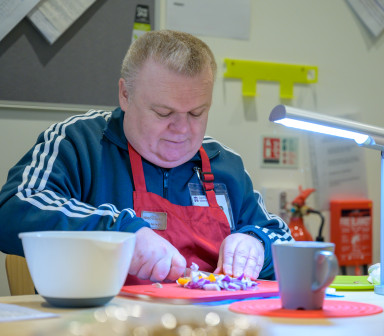
Five things to know about lighting for visual impairments and sight loss
In our latest blog, Sight Scotland Veterans Lead Rehabilitation Officer, Sandra Taylor, shares five key things to know about lighting for those with visual impairment (VI).
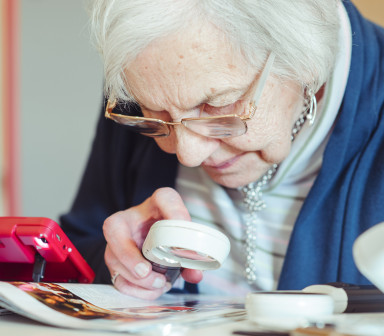
Five things to know about using handheld magnifiers
In our latest blog, Sight Scotland Veterans Lead Rehabilitation Officer, Sandra Taylor, shares five key things to know about using handheld magnifiers
Five things to know about sighted guiding
In our latest blog, Sight Scotland Veterans Rehabilitation Officer, Mick Hilton, shares five key things to know about sighted guiding for people with sight loss or a visual impairment.