Visually impaired secret shoppers are going undercover at Edinburgh Festival Fringe venues to find out how accessible the festival is for disabled audiences.
Volunteers from Sight Loss Councils Scotland and Sight Scotland’s Policy Group have been making unannounced visits to Fringe venues, attending shows and experiencing the customer journey for themselves. Their aim is to identify what is working well, highlight any barriers and help venues make further improvements to accessibility.
The secret shoppers have also helped deliver accessibility training to Fringe staff and performers over the past two years. Their visits are helping to assess whether that training and increased awareness are making a real difference to the experience of people with sight loss.
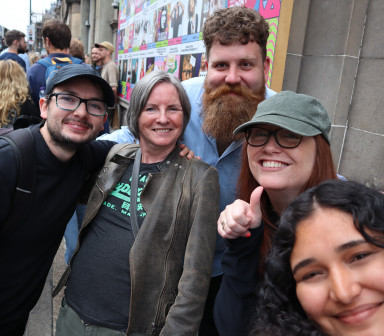
Accessibility training making a difference
The volunteers have welcomed progress across the Fringe, with accessibility training and closer collaboration between venues and people with sight loss helping to drive positive change.
However, they say accessibility needs to remain a year-round priority. Venues must continue to listen, learn and build on improvements to ensure disabled audiences can enjoy performances and events on an equal footing with everyone else.
Callum Lancashire, Engagement Manager for Sight Loss Councils Scotland, has macular degeneration and has helped deliver accessibility training to venues at the Edinburgh Festival Fringe and Glasgow’s Celtic Connections festival.
He says:
"We have seen first-hand how accessibility is improving, particularly when venues are willing to listen, learn and take practical steps to make a difference. Over the past two years, we have worked alongside our rehabilitation colleagues at Sight Scotland to deliver accessibility training for venues across the Edinburgh Festival Fringe, including the Pleasance, and it has made a big difference.
"What is really encouraging is that we don't just deliver the training and walk away. Afterwards, our volunteers go back as secret shoppers, visit the venue, attend shows and experience the customer journey for themselves. That gives us a unique insight into whether the training is making a difference, and in many cases the impact has been huge."
Small changes can make a big difference
For people with sight loss, simple changes to the way staff communicate and provide assistance can have a significant impact on their experience.
Callum says:
"Many of the changes we're talking about are simple to implement. Often, it's just about raising awareness and helping people understand the small adjustments that can make a big difference. It's about making staff aware of visual impairment, helping them understand the barriers people can face, and giving them the confidence to offer assistance when needed. Those aren't major changes for a venue to make, but they can make a huge difference to somebody's experience.
"Something as simple as clearly introducing yourself, offering sighted guidance, explaining the layout of a space, or proactively asking if someone needs help can completely transform a visit. It helps people feel welcome, included and able to enjoy the festival independently."
The secret shopper approach gives people with sight loss the opportunity to provide direct feedback about what happens when they arrive at a venue, navigate the space and attend a performance.
Callum says:
"We have now worked with venues across the Edinburgh Festival Fringe, supported organisations involved in Celtic Connections, and have a number of new partnerships in the pipeline. We know this approach works because we've seen the impact first-hand. More and more venues from across Scotland are reaching out to us to take part in our accessibility training and events, which is hugely encouraging. Accessibility is improving, but there is still more to be done. Every venue has a responsibility to make it a priority. A person with a visual impairment should be able to enjoy a show just as much as anyone else."
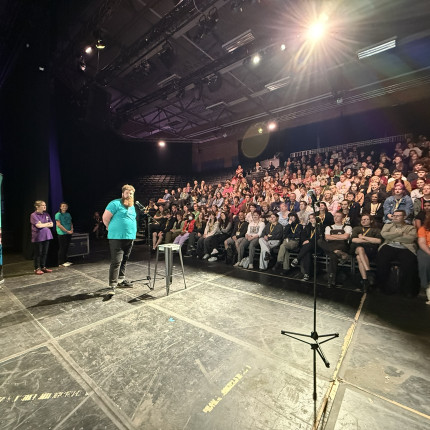
Creating accessible and inclusive festival venues
Colette Walker, Co-Chair of Sight Scotland’s Policy Group and a guide dog user, says accessibility is about much more than physical access to a venue.
“This training is a gamechanger. By equipping frontline teams with the awareness, empathy and practical understanding they need, we empower venues to go far beyond basic compliance, to truly see people, anticipate barriers, and offer support that feels natural, respectful and empowering. For me and thousands of others with visual impairments, that means being able to walk into a festival venue with my guide dog, navigate with confidence, and enjoy every moment just like anyone else.
“It’s not just about ramps or wide doors, its clear information, thoughtful signage, straightforward ticketing, and staff who know exactly how and when to step in and use clear communication. These are often small, simple changes, yet they make a life changing difference: the freedom to choose, to attend independently, to belong. This builds powerfully on the findings from Sight Scotland’s Accessible Venues Report proving that when we listen, act, and design for everyone, we all win.”
Supporting blind and visually impaired performers
Accessibility at the Edinburgh Festival Fringe is also about ensuring blind and visually impaired artists have opportunities to perform, develop their careers and have their work celebrated.
Sight Scotland and Sight Scotland Veterans have been working with Extant, the UK’s leading professional performing arts company of blind and visually impaired artists, to promote and celebrate visually impaired talent while helping to advance accessibility across the festival.
The charities have also produced a Guide to Accessible Arts at the Edinburgh Festivals and beyond.
The work of the secret shoppers is part of a wider commitment to making events and cultural experiences more accessible to people with sight loss. By listening to disabled audiences, providing practical accessibility training and continuing to work with venues, Sight Scotland is helping to make sure people with visual impairments can experience the Edinburgh Festival Fringe with greater confidence, independence and inclusion.
Your Guide to Accessible Arts at the Edinburgh Festivals
Our 2026 round-up of the venues and organisations committed to making the arts more inclusive for people with visual impairment at Edinburgh's festivals.
Accessible Venues
Accessible venues are essential to ensure people with visual impairment can enjoy events, concerts and performances.
Sight Loss Councils Scotland
Learn about Scotland's Sight Loss Council (SLC) and how to join.